Guiding Ideas
What is land? What can it look like?
Ingredients for today’s lab
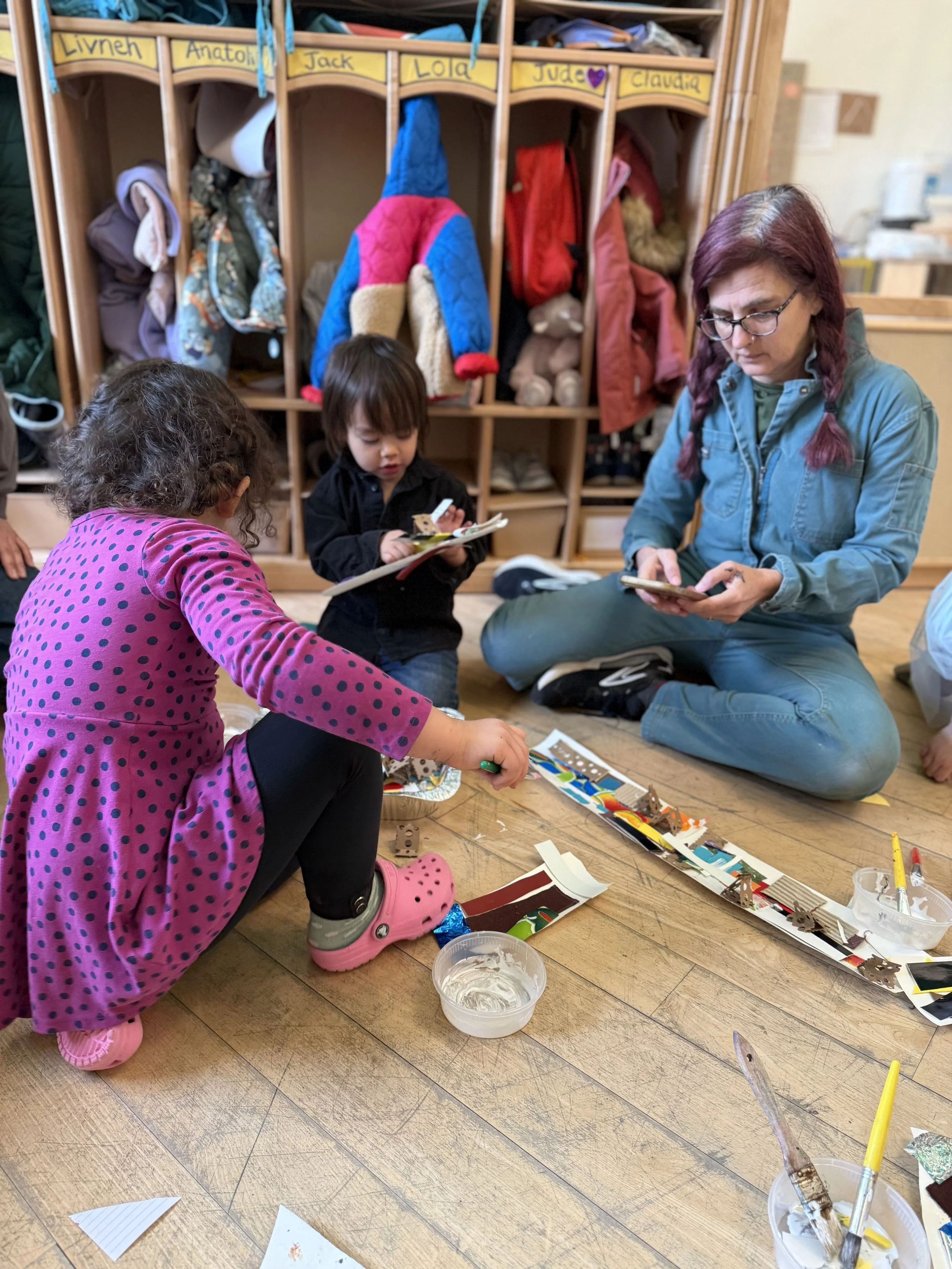
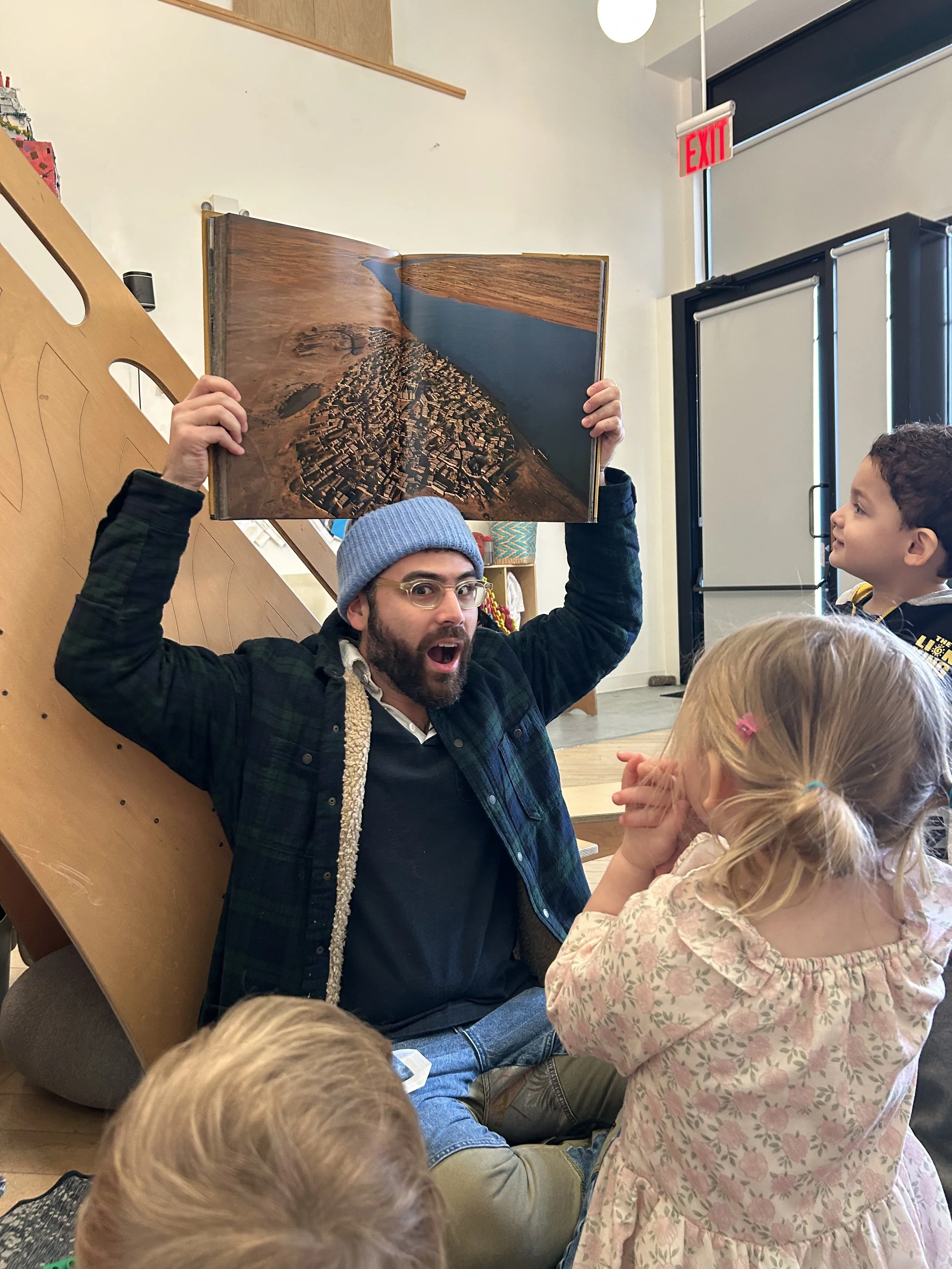
cut up plastic, cut up paper, glue, the book Earth from Above by Yann Arthus-Bertrand. Thank you to Romina for lending us the book!
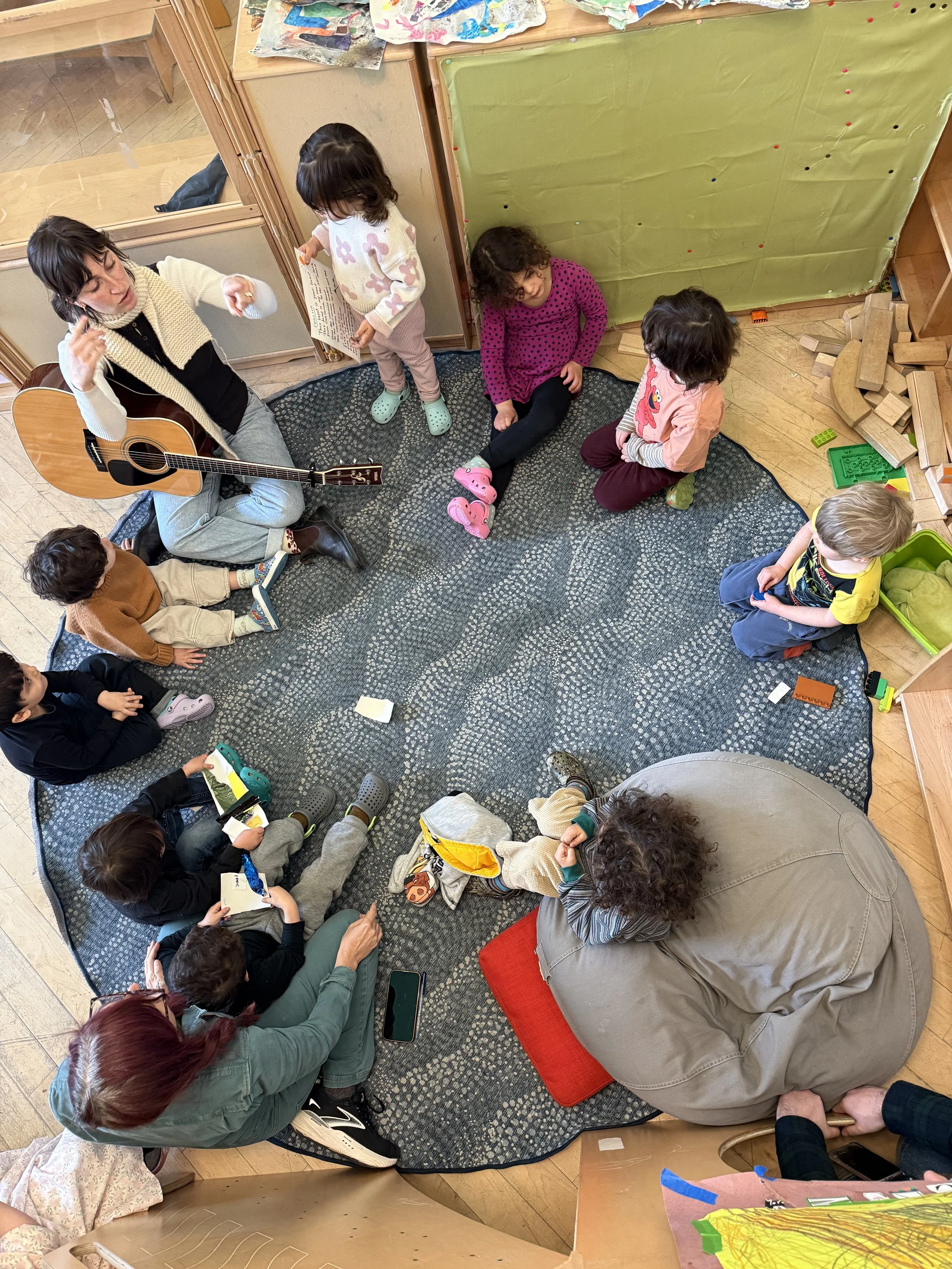
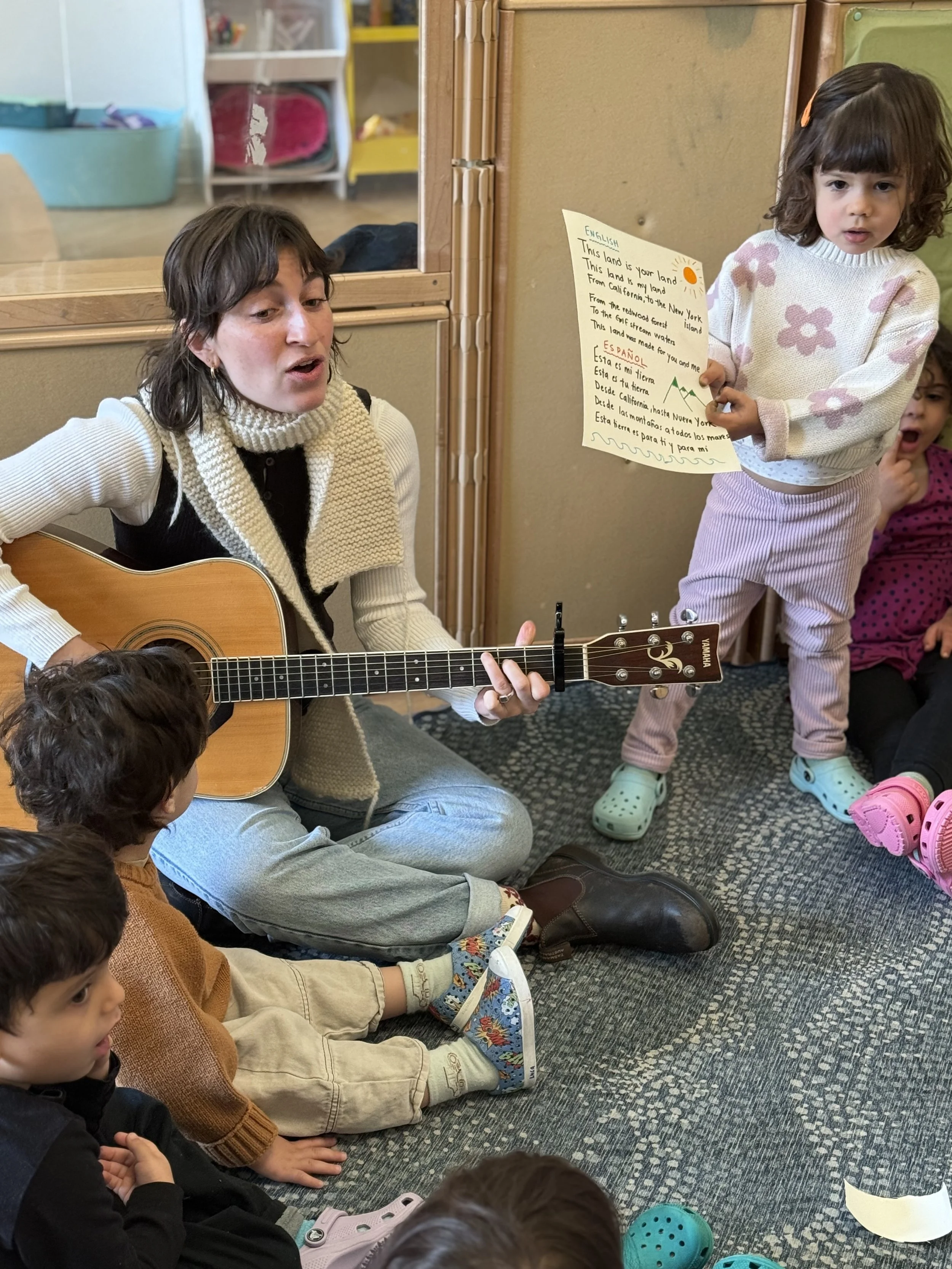
Isabel lead a bilingual sing-a-long of This Land is Your Land by Woody Guthrie to ground our initial circle time!
What just happened?
Amigues co-constructed a poem. What would you call it?
A Poem
Those cracks are a little scary
y hay un monstruo
I see a big muddle
Call it animals
Call it stone rock floor
Or ocean land
Look at my material
It feels like a sharp metal
You take a picture of the moon.
Put it in the sunlight
Go to the roof and say
The power of the monster is gone
I made Puerto Rico
I made the Brooklyn Bridge
Un puente
The woods
A snow mountain
Nueva York
My mountain is very pointy like a sword
Isla, Montana, crocodiles
I don’t know what that is.
A giraffe, a garden and greens.
Chickens.
Reflexiones de Nicole
En el Lab estuvimos explorando la idea de tierra. Conversamos sobre cómo las tierras pueden ser muy diferentes entre sí y cómo cada lugar puede tener sus propias características, paisajes y habitantes.
Cada amigx imaginó su propia tierra y usó acuarelas para darle forma y color.
Aliya quiso añadir una piscina.
Iris pintó un arcoíris.
Zoya creó montañas y lagos.
Toly llenó su tierra de muchos animales.
Mientras algunos amigxs construían puentes, Sebastián se interesó por explorar la textura de la acuarela, primero en sus dedos… y luego también en su cara.
Kai, por su parte, descubrió cómo activar los colores usando el spray de agua con fuerza y precisión.
A medida que las tierras iban apareciendo, también comenzaron a recibir nombres muy especiales: Kikicucu, Isla Iris, Isla Brooklyn y Rainbow.
Ahora que cada tierra tiene su propio nombre y sus propias características, el siguiente paso será conectarlas con los puentes que los amigxs construyeron, para que sus habitantes puedan viajar entre ellas.
Como nos recordó Isabel con una canción que compartió con la clase, Mi tierra es tu tierra.